
Nearly 70 percent of women in India experience painful periods, but not all pain is normal. Many of us grow up hearing that cramps are a routine part of menstruation, but intense discomfort can be a signal that something deeper is happening in the body. If you often question severe period cramps when to worry, it means your pain is affecting your routine, consistency or wellbeing. This blog helps you recognise when cramps are normal and when they point toward a medical concern that needs timely attention.
Understanding Period Pain: Normal Vs Abnormal
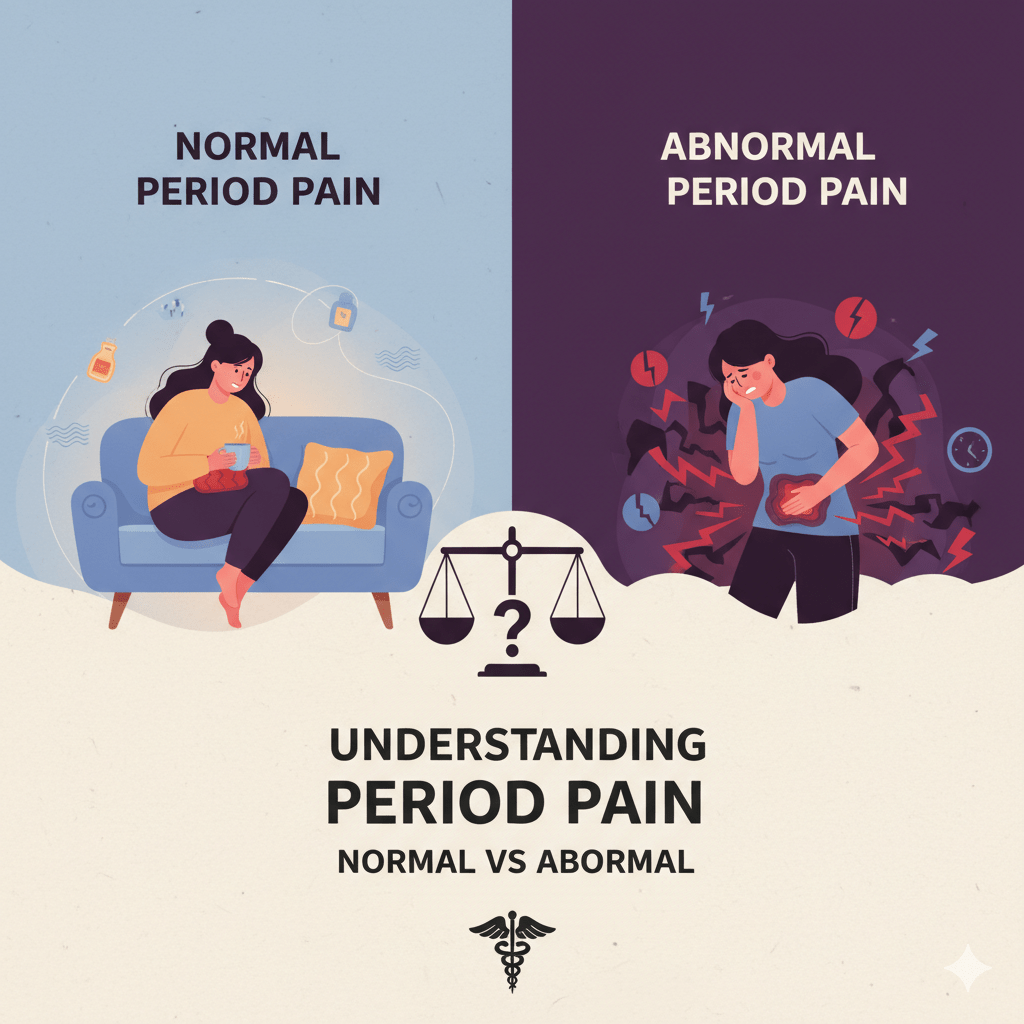
To understand severe period cramps when to worry, you first need to differentiate between typical cramps and concerning ones. Normal menstrual cramps occur because of natural hormonal changes that make the uterus contract. These usually start a day or two before bleeding, stay in the lower abdomen or back and settle within two to three days.
However, abnormal cramps follow a different pattern. The intensity may rise every month, the pain may last longer, or it may appear even when you are not on your period. Many Indian women normalise this discomfort, but secondary conditions like fibroids, ovarian cysts or endometriosis can be the real cause.
Normal period pain often includes:
- Cramps lasting 2 to 3 days
- Pain improving with heat or basic pain relief
- A stable flow pattern every cycle
Abnormal period pain may include:
- Increasing pain intensity
- Pain lasting beyond 3 days
- Cramps appearing between cycles
- Heavy flow, clots or unusual weakness
If you feel your symptoms match the abnormal category, it is a strong hint toward severe period cramps when to worry. For more menstrual knowledge, you can explore useful articles in the menstrual health section at Menstrual Health.
Period Cramps Warning Signs You Should Never Ignore
Once you understand what normal looks like, the next step is identifying warning signs. These symptoms are your body’s way of saying that your concern about severe period cramps when to worry is valid and should not be ignored.
If pain stops you from getting out of bed, affects your focus or keeps you from work or studies, it is not just routine discomfort. Pain that is too intense or too frequent often indicates an underlying condition that needs evaluation.
Watch out for these important warning signs:
- Pain that becomes unbearable or restricts movement
- Cramps that do not reduce even after taking painkillers
- Sudden new or unusual pain
- Pain spreading to thighs, back or causing nausea
- Heavy bleeding with large clots
- Cramps starting days before the period begins
- Severe pain during or after intercourse
These are signals that you need to look into severe period cramps when to worry instead of pushing through silently. For comfort and relief strategies, you can explore tips at period pain relief.
Common Causes of Abnormal Period Cramps in the Indian Context
Understanding why cramps become abnormal helps you take informed decisions. In India, many women suffer for years because painful periods are often dismissed as normal. In reality, several medical conditions can cause severe or frequent period pain.
Common causes include:
- Endometriosis
When uterine-like tissue grows outside the uterus, it leads to deep pelvic pain, painful intercourse and sometimes fertility issues. - Uterine fibroids
These benign growths can cause heavy bleeding, pelvic pressure and intense cramps during menstruation. - Adenomyosis
Uterine lining grows into the muscle wall, causing a bulky uterus, heavy flow and strong cramps. - Pelvic Inflammatory Disease
Infection in the reproductive organs that causes pain, discharge and discomfort. - Copper IUD side effects
Some women experience heavier, more painful cycles after inserting a copper IUD. - Hormonal imbalances or ovarian cysts
These conditions can also lead to irregular or painful periods.
If your symptoms align with any of these, your ongoing concern about severe period cramps when to worry is justified. Seeking medical advice ensures timely treatment and long-term comfort.
When To See a Doctor for Heavy Menstrual Pain in India
The key question many women have is: when is it time to consult a doctor? If your pain disrupts your normal routine, keeps getting stronger or feels different from usual cycles, it is time to get medical care.
You should see a doctor if:
- Pain interferes with work, studies or daily responsibilities
- Pain continues even after taking medicines
- Flow becomes heavy with clots or frequent pad soaking
- Pain suddenly intensifies after years of manageable periods
- You experience pain outside your cycle
- You have fever, vomiting or fainting with cramps
- Sex becomes painful or uncomfortable
Each of these signs is a clear indication of severe period cramps when to worry, and seeking help early prevents complications that may affect long term health or fertility.
How To Talk to Your Doctor About Period Pain
Once you decide to seek help, preparing for your appointment makes the visit more effective. Many women hesitate or forget important details during consultations, but sharing accurate information helps your doctor diagnose the cause correctly.
Here are simple steps to follow:
- Track your symptoms
Note flow level, pain intensity, dates and other symptoms for at least two cycles. - Describe pain accurately
Use words like dull, sharp, throbbing, shooting or burning. - Mention all remedies tried
Include medicines, heat therapy and home remedies. - Share complete personal history
Including infections, pregnancies and contraceptive use. - Ask clear questions
Examples: “Why is my pain increasing?”, “Do I need an ultrasound?”, “Could this be endometriosis?”
Clarity during your consultation helps you understand treatment options and manage pain more effectively.
Conclusion
If you find yourself questioning severe period cramps when to worry month after month, it is time to listen to your body. Severe pain is not normal and you do not have to tolerate it silently. When cramps affect your routine, feel unusual or keep increasing, reaching out for medical advice is the right step toward relief and confidence. For more menstrual insights, self-care guides and cycle support, you can visit Menstrual Cycle for complete information.