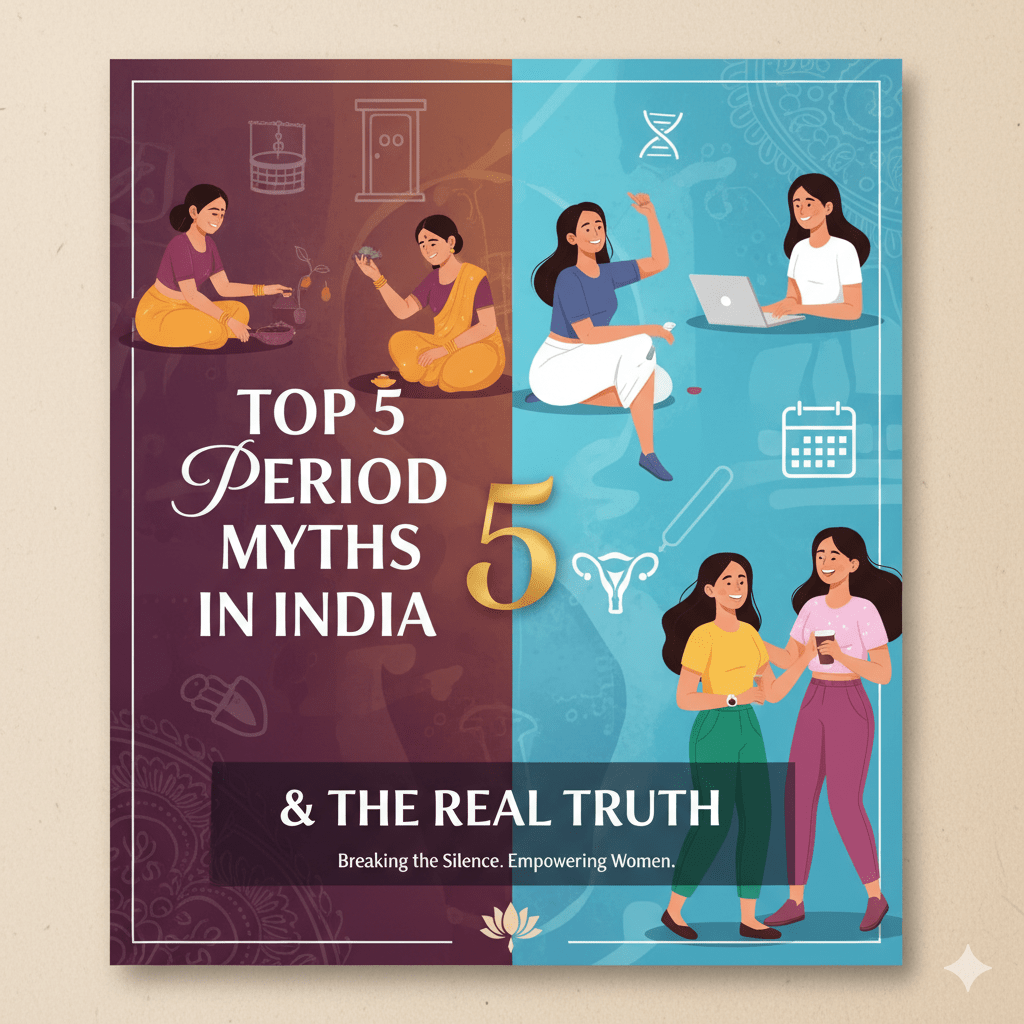
Did you know that almost half of Indian girls learn about periods only when they get their first one, and many still grow up with strict rules and taboos around menstruation? No surprise that period myths India continue to control how girls move, eat, pray and even feel about their own bodies.
In many homes, menstruation is spoken about in hushed tones, linked to impurity, shame or weakness. These old beliefs often clash with modern science and keep girls from living their normal lives during those few days. That is exactly why we need to clearly separate myths from facts.
In this blog, we will walk through the top 5 period myths India and bust them with simple, relatable and science backed explanations. By the end, you will have practical menstruation facts India you can use for yourself, your daughter, your friends and anyone who still believes these myths.
Myth 1: Menstruating Women Are Impure and Should Follow Restrictions
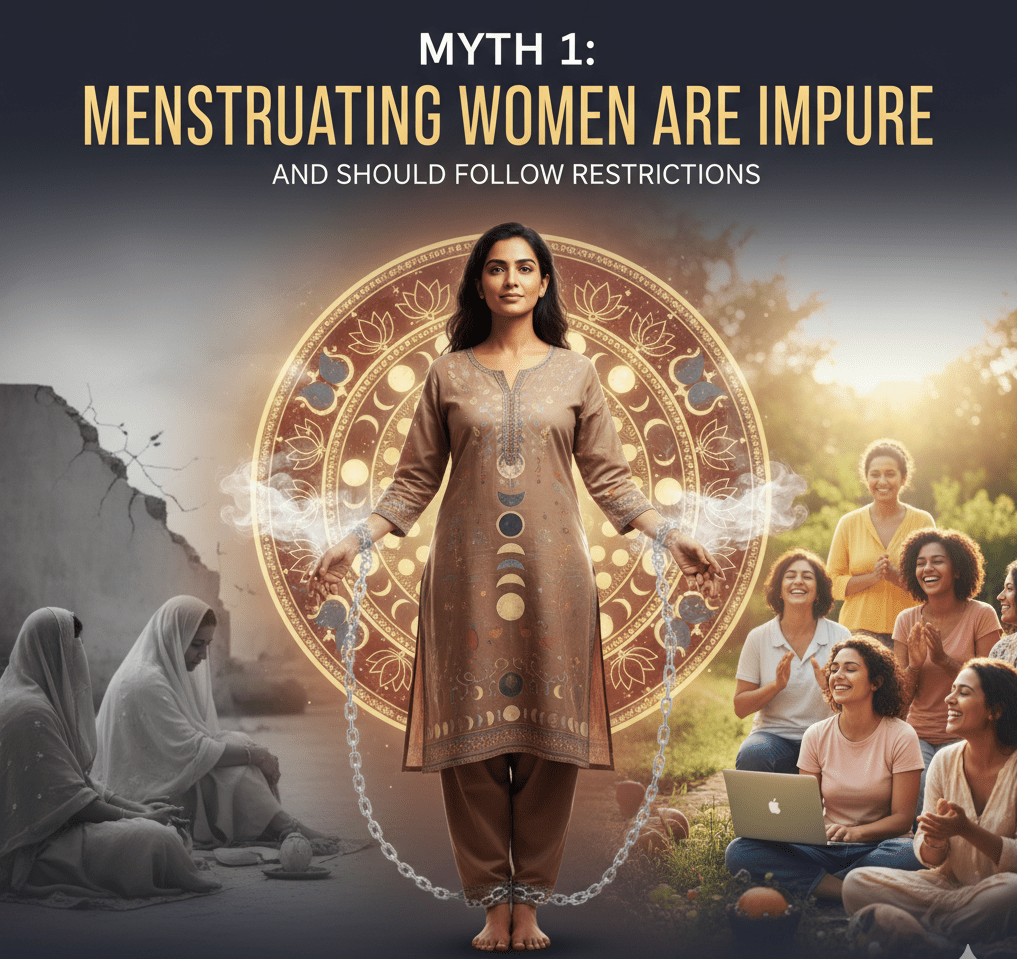
Let us begin with the most common menstruation myths in Indian households. In many families, girls are told not to enter the puja room, kitchen or attend functions during their period because they are “unclean.”
Here is the real truth behind this popular part of period myths India:
- Menstruation is a natural biological process where the uterus sheds its lining. It is not dirty blood.
- The flow is a mix of blood, tissue and mucus that your body naturally releases every month.
- There is no scientific proof that a menstruating girl harms gods, food, plants or other people by touching them.
- Restrictions like sleeping separately or not touching pickles are cultural practices, not medical guidelines.
When families strictly follow these myths about menstruation India, girls start believing that their body is impure for a few days every month. This affects confidence, mental health and comfort.
A healthier approach is to focus on hygiene, emotional support and awareness. If you want to learn the basics, explore the period basics category for foundational knowledge.
Myth 2: You Should Not Bathe or Exercise During Periods

After “impurity,” this is one of the loudest period myths India. Many girls are told that bathing will “increase bleeding” or movement will worsen cramps.
Here is the myth vs fact for periods in India:
- Bathing with warm water relaxes your muscles and eases cramps.
- Washing the genital area regularly keeps you fresh and reduces infection risk.
- Light exercise improves blood circulation and reduces pain for many women.
- Only extremely intense exercise may feel uncomfortable during heavy flow days.
You do not need to avoid water; you only need to maintain hygiene.
Some practical ways to bust this part of Indian period myths busted:
- Take a warm shower if you feel tightness or cramping.
- Wear comfortable clothes and a reliable period product.
- Try simple activities like stretching, slow walking or yoga.
- Listen to your body and avoid activities that feel too heavy.
To build healthy daily habits, check the menstrual hygiene category for guidance.
Myth 3: You Cannot Get Pregnant During Your Period

Many people believe that sex during the period is completely safe because pregnancy cannot occur. This misunderstanding is one of the riskiest period myths India.
Here is the truth:
- A “typical” cycle is 28 days but can vary for each person.
- Sperm can survive in the reproductive tract for up to five days.
- If someone ovulates shortly after their period, pregnancy can occur.
- Unprotected sex towards the end of the bleeding days still carries risk.
So, while the chances might be lower, they are not zero. Treating this myth as fact has caused many unplanned pregnancies.
To genuinely bust this myth vs fact period India idea:
- Use contraception if you do not want to conceive.
- Track your cycle, but do not fully depend on safe days.
- Speak to a gynaecologist if your cycle is very irregular or painful.
Understanding menstrual health is more reliable than following outdated instructions.
Myth 4: Using Tampons or Cups Takes Away Virginity
This is one of the most emotional period myths India, especially among teenagers. Many believe that inserting a tampon or menstrual cup will “break the hymen” and affect virginity.
Here is the real science:
- Virginity is a cultural idea, not a medical term.
- The hymen is a stretchy tissue that can naturally open due to sports, cycling or even normal movement.
- Some people are born with very little hymenal tissue.
- Using a tampon or cup does not determine anyone’s sexual history.
This period myth virginity India can stop girls from choosing products that are comfortable and hygienic.
If you want to try tampons or cups but feel unsure due to the tampon myth India, follow these tips:
- Start with a small size and stay relaxed.
- Insert gently after the flow begins.
- Change at the recommended intervals.
- Speak to a doctor if you face discomfort.
Breaking this myth supports confidence, freedom and menstrual hygiene awareness.
Myth 5: Severe Period Pain Is Normal and You Must Tolerate It
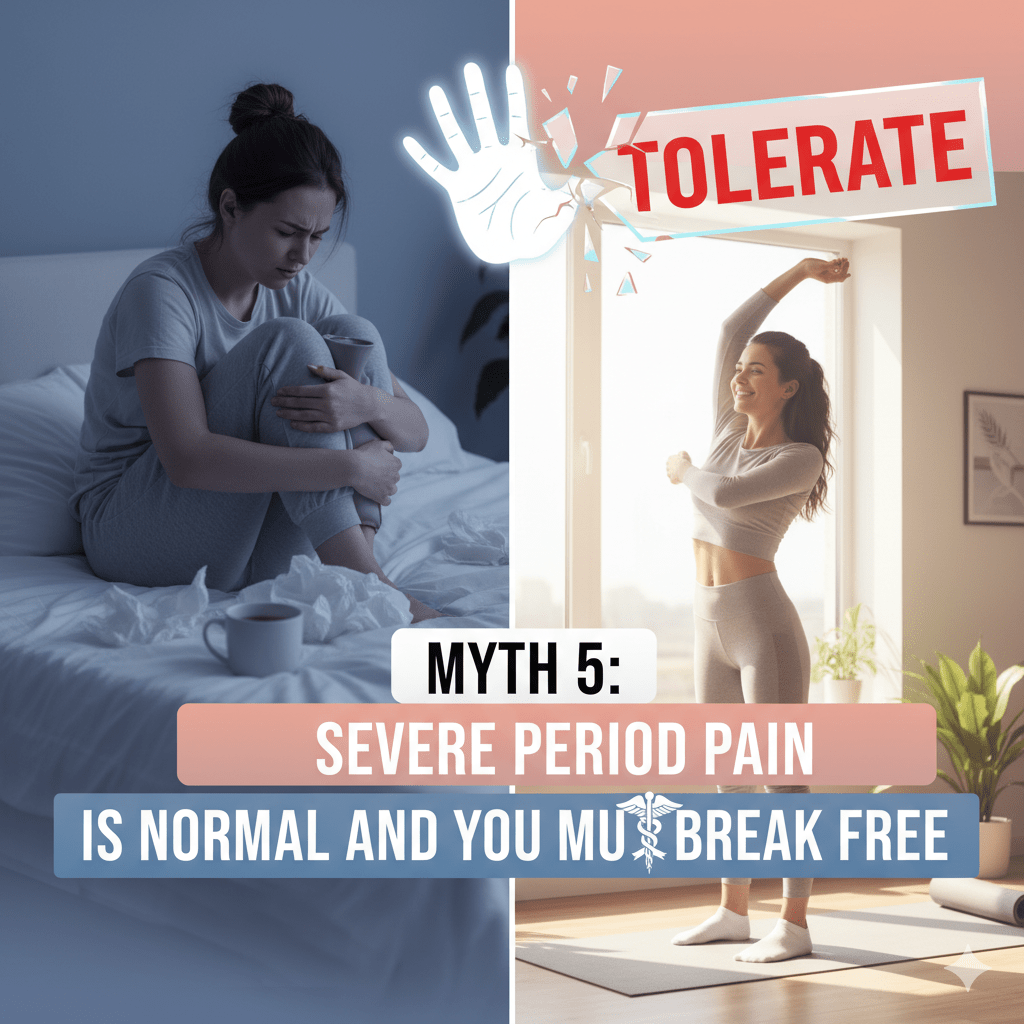
Among all period myths India, this one is the most harmful. Many women are told to silently tolerate pain without checking for underlying issues.
Here is the actual fact:
- Mild cramps are normal, but severe pain is not.
- Intense cramping may signal endometriosis, fibroids or other conditions.
- Ignoring severe pain delays treatment and affects daily life.
- Pain that stops you from functioning needs medical attention.
Signs that your pain is not normal:
- You repeatedly miss school, college or work.
- Over the counter medicines give limited or no relief.
- You have heavy bleeding or large clots.
- Pain is getting worse each month.
When we stop telling girls that “pain is normal,” we shift from menstruation myths to menstrual health awareness.
Conclusion
For years, period myths India have shaped how girls behave, what they eat and how they feel about their bodies. Myths about impurity, activity restrictions, pregnancy risks and virginity continue because they are passed down through generations. But once we introduce genuine menstruation facts India, everything starts to change.
When parents, teachers and young people openly question old beliefs, menstrual health becomes easier to talk about. Every small correction makes someone’s life better. If you want to explore more and understand your cycle deeply, visit our period health guide and continue learning.