
Did you know that more than 90 percent of women experience gel like discharge at some point in their reproductive years?
While vaginal discharge is completely normal, changes in texture, colour or consistency often create doubt or confusion. Some women notice gel like discharge during ovulation, others observe it as part of early pregnancy discharge, while a few experience it due to infection symptoms. Understanding vaginal discharge types and what your body is trying to communicate is essential for maintaining everyday comfort and reproductive health. This guide explains every major reason behind gel like discharge and helps you understand when a change is normal and when it needs attention.
What Is Gel Like Discharge
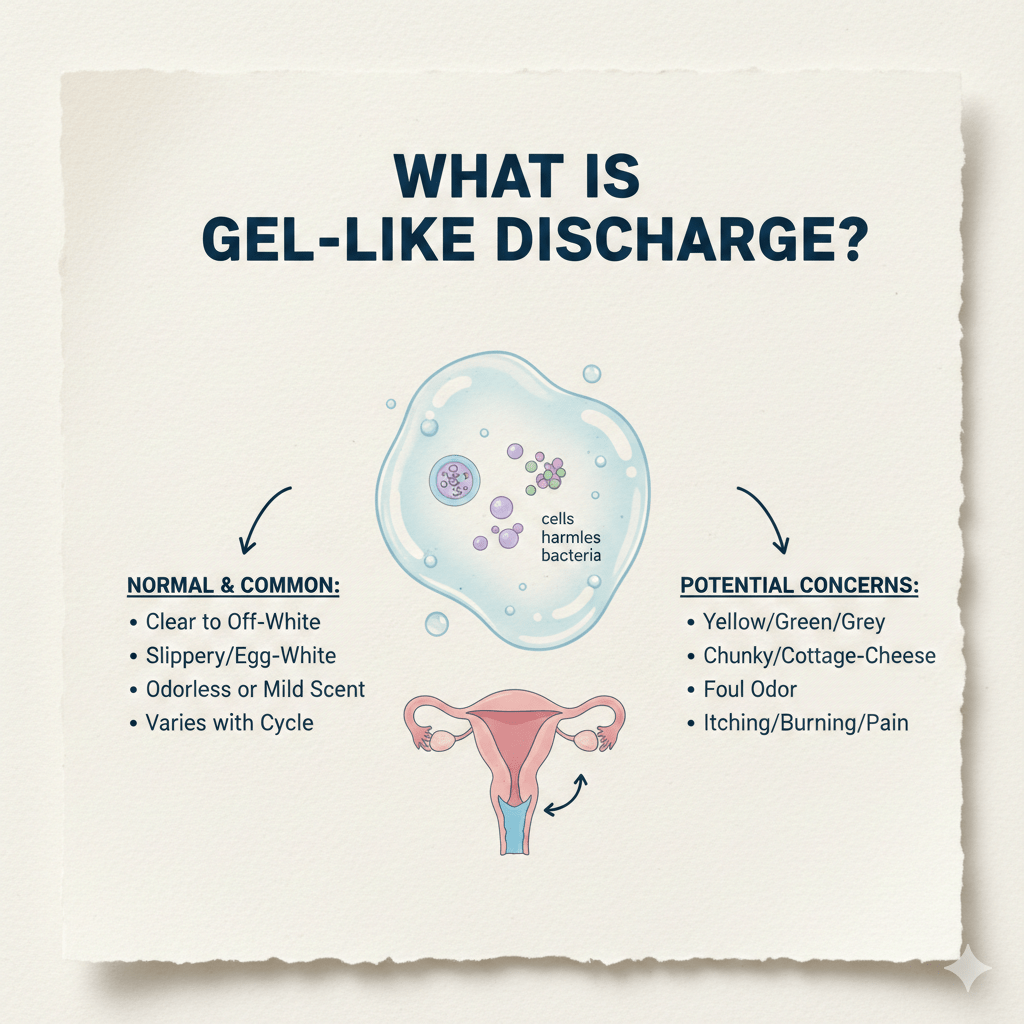
Gel like discharge is a type of vaginal fluid that appears thick, stretchy or jelly like. It can be transparent, whitish or slightly cloudy depending on where you are in your menstrual cycle. Most of the time, this change is linked to natural cervical mucus changes that occur due to hormonal shifts.
Before exploring the causes, it is important to understand that vaginal discharge plays a protective role. It keeps the vagina clean, maintains pH levels and prevents harmful bacteria from entering. This natural function means discharge will change multiple times throughout your cycle.
Many women confuse gel like discharge with infection symptoms, but the context and colour help identify whether the change is normal or concerning.
Understanding Vaginal Discharge Types
Vaginal discharge types vary widely. Throughout a menstrual cycle, the body produces several forms of cervical mucus influenced by hormones like estrogen and progesterone.
Transitioning into a deeper understanding of these types helps you decode each texture with clarity.
Common Vaginal Discharge Types
- Dry or nearly absent discharge
This usually appears right after your period ends. The vagina feels dry and there is little to no visible mucus. - Sticky or pasty discharge
As your body prepares to release an egg, the discharge becomes sticky but remains thick. - Creamy white discharge
This commonly occurs before ovulation and is often mistaken for white discharge causes linked to infections. However, creamy discharge is normal unless it comes with odour or itching. - Egg white or slippery discharge
This is ovulation discharge. It stretches between the fingers and indicates peak fertility. - Gel like discharge
A thicker, fuller, jelly like discharge that appears around ovulation or before a period. It may also appear in early pregnancy. - Watery discharge
Light, clear and runny mucus that appears at different times in the cycle.
Identifying these vaginal discharge types helps you notice patterns and spot when something feels different from your usual.
Gel Like Discharge During Ovulation
One of the most common reasons for gel like discharge is ovulation. When the egg is about to release, cervical mucus changes significantly.
Transitioning into the science behind this helps you understand its purpose.
How Cervical Mucus Changes During Ovulation
During ovulation, cervical mucus becomes highly fertile. While the well-known egg white discharge is a sign of fertility, some women produce gel like discharge instead. This happens when the mucus becomes thick but still stretchy. It may appear clear, whitish or slightly clumpy but does not carry any bad smell.
Why It Happens
- The cervix produces more mucus to support sperm travel.
- Estrogen levels peak, influencing the thickness and texture.
- The vagina increases natural lubrication before ovulation.
Ovulation discharge in the form of gel-like mucus is completely normal and is simply a part of cervical mucus changes linked to your menstrual cycle.
Gel Like Discharge Before Period
Many women notice a jelly like or thick discharge a few days before their period. This happens due to rising progesterone levels after ovulation.
Transitioning into how this hormone influences mucus will make it clearer.
The Role of Progesterone
Progesterone thickens cervical mucus and prepares the uterus for a potential pregnancy. If fertilisation does not occur, the mucus may appear as gel like discharge right before menstruation.
How It Appears
- Thick and creamy
- Yellowish or whitish
- Sticky or lumpy
- Odourless
This pattern is normal unless the discharge becomes foul smelling or is paired with infection symptoms.
Gel Like Discharge in Early Pregnancy
Some women experience gel like discharge during early pregnancy. The body reacts to hormonal changes almost immediately after conception, increasing vaginal lubrication.
Transitioning into the early pregnancy discharge explanation helps you identify key markers.
Why Early Pregnancy Discharge Occurs
- Increase in progesterone
- Enhanced blood flow to the pelvic region
- Formation of the mucus plug
How To Identify Early Pregnancy Discharge
- Whitish or milky texture
- Jelly like consistency
- Mild increase in quantity
- No itching, discomfort or strong odour
This form of gel like discharge supports the womb’s environment and safeguards the pregnancy.
If this discharge becomes clumpy like cottage cheese or foul smelling, it may indicate an infection rather than pregnancy.
White Discharge Causes Explained
White discharge causes vary widely and do not always signal a health problem. Sometimes it is normal, other times it may be linked to hormonal changes or mild infections.
Transitioning into these reasons will help you differentiate between normal and abnormal discharge.
Normal Causes of White Discharge
- Rising progesterone after ovulation
- Early pregnancy discharge
- Natural lubrication
- Cervical mucus changes before periods
When White Discharge Indicates A Problem
If white discharge appears thick, clumpy, itchy or has a strong smell, it may point to:
- Yeast infection
- Bacterial imbalance
- Poor vaginal hygiene
- Allergic reaction to products
Understanding the characteristics helps you identify whether white discharge causes are harmless or require attention.
When Gel Like Discharge Means Infection
While gel like discharge is often normal, there are times when it becomes a sign of infection, especially if accompanied by changes in colour or odour.
Transitioning into infection symptoms will help you detect when care is needed.
Infection Symptoms You Should Not Ignore
- Strong, unpleasant odour
- Itching or burning
- Yellow, green or grey coloured discharge
- Pain during urination
- Pelvic discomfort
- Fever or chills in severe cases
These symptoms suggest possible conditions like yeast infection, bacterial vaginosis or sexually transmitted infections.
Normal gel like discharge should not cause discomfort. Any irritation paired with discharge is a red flag.
Cervical Mucus Changes Throughout Your Cycle
Understanding cervical mucus changes makes it easier to identify normal versus abnormal patterns.
Transitioning into how these stages typically unfold creates clarity.
Key Stages of Cervical Mucus Changes
- Post-period dryness
Little to no mucus. - Pre-ovulation sticky mucus
Thick and crumbly or pasty. - Fertile mucus
Clear, slippery, egg white or gel like discharge. - Post-ovulation creamy mucus
White, smooth and thicker. - Pre-period mucus
Thick, gel like discharge due to rising progesterone.
Tracking mucus helps you predict ovulation, pregnancy windows and infection symptoms more accurately.
How To Distinguish Normal Gel Like Discharge from Infections
Since many women feel confused, understanding the difference between normal and abnormal patterns is essential.
Transitioning into the comparison below offers easy identification.
Normal Gel Like Discharge
- Clear, cloudy or whitish
- Stretchy or thick
- Odourless
- Appears around ovulation, pregnancy or before periods
- No pain or itching
Abnormal Discharge
- Strong fishy or sour smell
- Yellow, green or grey colour
- Cottage cheese texture
- Pain, itching or swelling
If in doubt, seek medical guidance. Early detection improves treatment outcomes.
Daily Hygiene Tips to Maintain Vaginal Health
Good feminine hygiene supports the balance of bacteria and keeps discharge healthy.
Transitioning into healthy practices builds confidence in everyday care.
Simple Hygiene Tips
- Use mild, unscented cleansers
- Avoid douching
- Change underwear daily
- Wear cotton based fabrics
- Avoid tight clothing
- Maintain hydration
- Practise safe sex
Accessing helpful resources like the Feminine Health section or Period Hygiene guide keeps you informed and confident.
Conclusion
Gel like discharge is often a natural part of cervical mucus changes influenced by hormones, ovulation, pregnancy or the menstrual cycle. Understanding vaginal discharge types and recognising early pregnancy discharge or typical ovulation discharge helps you distinguish normal patterns from infection symptoms. Awareness of white discharge causes and daily hygiene practices also protects your long-term reproductive health. When you understand your body’s signals, you can handle every phase of your cycle comfortably and confidently. For more detailed guidance, visit the menstrual cycle and explore helpful resources designed for women who want trusted support and better clarity.
Frequently Asked Questions
-
Why do I have gel like discharge suddenly
Sudden gel like discharge often appears due to natural cervical mucus changes during ovulation or hormonal shifts near your period. It may also occur as early pregnancy discharge in some women. As long as the discharge is odourless and not accompanied by itching, it is usually normal. If the colour becomes yellow, green or grey, it may indicate infection symptoms. Observing when it occurs in your cycle helps identify the cause.
-
Is gel like discharge a sign of pregnancy
It can be. Early pregnancy discharge sometimes appears thick, jelly like or milky due to increased progesterone and the development of the mucus plug. However, gel like discharge alone does not confirm pregnancy. It should be considered alongside other symptoms like missed periods, fatigue and breast tenderness. If the discharge is foul smelling or itchy, it is more likely due to infection rather than pregnancy.
-
What does gel like discharge during ovulation mean
Gel like discharge during ovulation indicates increased fertility and high estrogen levels. This mucus supports sperm movement and helps the body prepare for conception. It may appear stretchy, slippery or clear, much like ovulation discharge. This is one of the most reliable vaginal discharge types for tracking fertility windows. It is completely normal unless paired with unusual odour.
-
Is white gel like discharge normal
White discharge causes include hormonal changes, post ovulation changes or early pregnancy. White gel like discharge is normal unless it becomes thick, clumpy or itchy. When paired with discomfort, it may indicate yeast infection or bacterial imbalance. Tracking the pattern helps you understand whether the discharge is part of your cycle or a sign of infection. If it persists with symptoms, consult a doctor.
-
How do I know if gel like discharge is an infection
If gel like discharge comes with itching, burning, bad smell or unusual colours like green or grey, it may be linked to infection symptoms. Pain during urination or discomfort during intercourse also indicates imbalance. Healthy gel like discharge should be odourless and free from irritation. Monitoring daily patterns makes it easier to detect changes. A diagnostic check helps confirm the cause.