Menstrual cups have become a preferred period product for many women who want comfort, long-term value, and a sustainable alternative to disposable pads or tampons. If you use one or plan to switch soon, one question naturally comes up: how long does a menstrual cup last?
The answer depends on several factors, including material quality, usage habits, and how well you care for it. While most cups are made to last for years, they are not permanent tools. Over time, they start showing signs of wear that tell you it is time for a replacement.
This blog gives you a complete, clear, and user-friendly guide to understanding menstrual cup lifespan, the real durability of medical-grade silicone, cleaning rules, and the exact signs that show your cup is ready to retire.
How Long Does a Menstrual Cup Last?
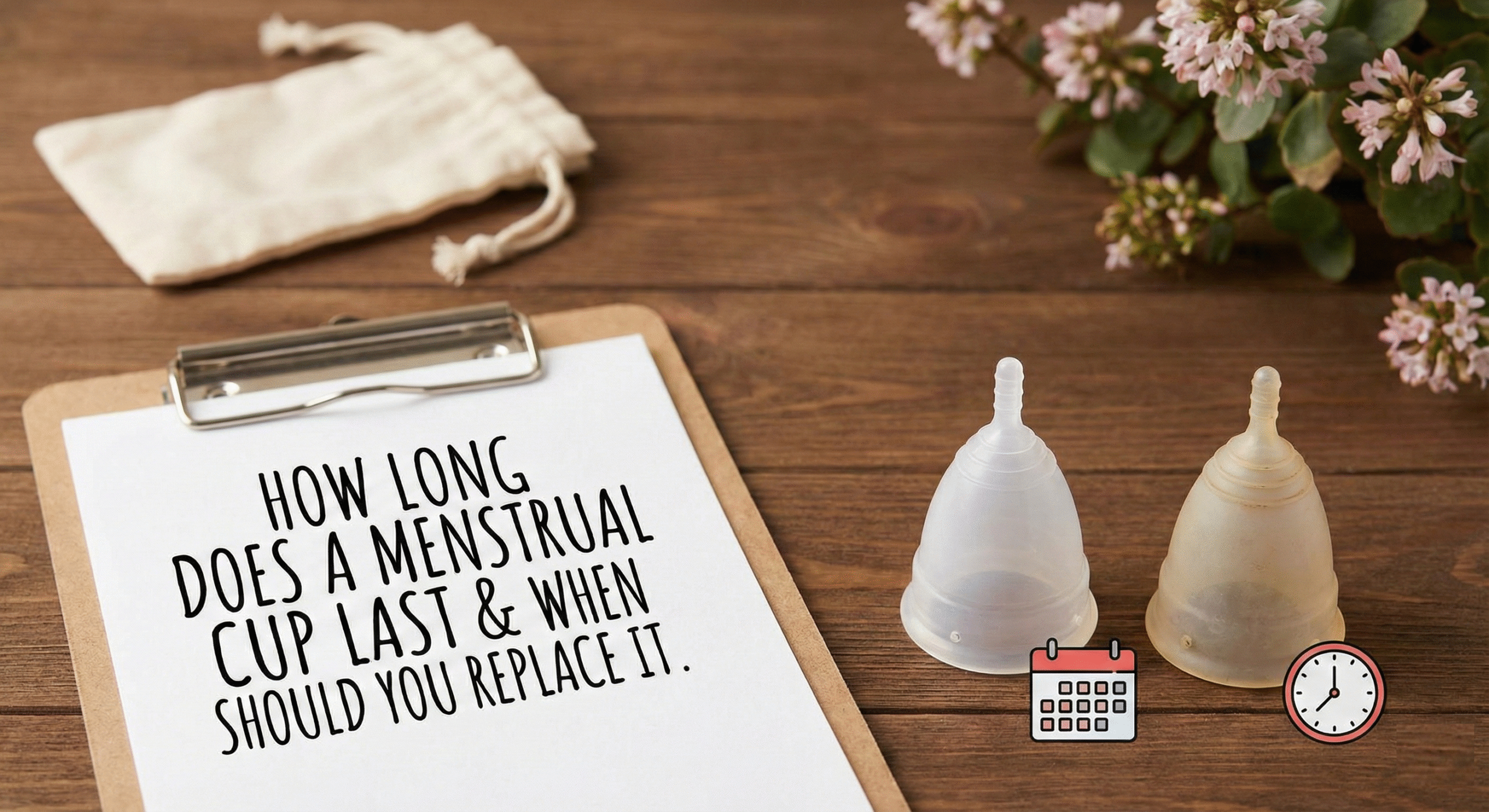
A good-quality menstrual cup made of medical-grade silicone typically lasts anywhere between 2 to 10 years. Many brands claim their cups can last up to a decade, but the practical answer depends on how well you care for the cup and how frequently you use it.
So, how long does a menstrual cup last in real-world conditions?
Most users find that a cup maintained with proper hygiene and storage stays in great shape for at least 3 to 5 years.
This range is considered the average menstrual cup durability cycle for everyday users who follow cleaning and sterilizing routines consistently.
What Determines the Lifespan of a Menstrual Cup?
The menstrual cup lifespan is influenced by several key factors. Understanding these can help you keep your cup safer, cleaner, and more durable for a longer period.
-
Type and Quality of Material
Medical-grade silicone is the most popular cup material. It is flexible, soft, safe for internal use, and long-lasting. A high-quality silicone cup will naturally have a longer lifespan compared to lower-quality materials like thermoplastic elastomer (TPE).
-
Frequency of Use
If you use your cup regularly every period, it will naturally wear faster than someone who uses it occasionally or switches between period products.
-
Cleaning and Sterilizing Habits
Following correct cleaning practices significantly increases menstrual cup durability. Cups that are improperly washed, left with residue, or stored in airtight containers degrade faster.
-
Water and Cleaning Products Used
Hard water, harsh soaps, or scented cleansers reduce the silicone cup lifespan. Only mild, unscented, water-based cleansers should be used, followed by proper boiling.
-
Storage Methods
Storing in breathable cotton pouches keeps moisture away. Plastic containers or zip bags trap humidity and promote microbial growth and discoloration.
How Often Should You Replace a Menstrual Cup?
If you are wondering how often to replace menstrual cup, the simple answer is whenever you notice physical changes that affect the cup’s performance or hygiene level.
Here is a general replacement guideline:
- For high-quality silicone cups
Replace every 3 to 7 years depending on usage. - For frequently used cups
Replace around the 2-to-4-year mark. - For casually used cups
Many users comfortably use them for up to 8 to 10 years before switching.
Remember, these timelines are estimates. Your cup will give you visible signals when it needs replacement.
Signs You Should Replace Your Menstrual Cup
Knowing when to switch your cup is more important than knowing how long does a menstrual cup last. Below are the exact warnings to look for.
-
Persistent Discoloration
It is normal for a silicone cup to get slightly stained over time. But if you notice deep discoloration that does not fade after boiling, it may indicate material breakdown.
-
Sticky or Chalky Texture
Silicone should always feel smooth. A cup that becomes sticky or chalky even after washing is showing clear material degradation. This is one of the strongest signs to replace menstrual cup.
-
Cracks, Tears, or Tiny Punctures
Even small cracks can compromise suction and cause leaks. A damaged rim or base is unsafe to use internally.
-
Loss of Shape
If your cup does not fully pop open inside, feels weaker than before, or collapses easily, the silicone has lost its elasticity.
-
Strong Odor
A menstrual cup should be odorless when cleaned correctly. A lingering smell indicates bacteria buildup or compromised material.
-
Irritation or Discomfort
If you begin experiencing discomfort that never occurred before, it may be due to the cup’s aging material or changes in your body.
-
Difficulty Maintaining Suction
A weakened rim, micro-tears, or warping reduces suction strength which leads to leaks.
If your cup shows any of these signs, choose safety and replace it immediately.
How to Increase the Lifespan of Your Menstrual Cup
Your reusable period cup care routine plays the biggest role in extending the cup’s durability. Here is a practical, user-friendly guide.
-
Clean After Every Use
Empty your cup every 8 to 12 hours. Rinse with cool water first to avoid stains, then wash with warm water and mild unscented cleanser.
-
Sterilize Before and After Every Cycle
Boil the cup for 5 to 7 minutes at the beginning and end of your period. This kills any bacteria and keeps the menstrual cup hygiene level high.
-
Avoid Harsh Cleansers
Do not use vinegar, alcohol, antibacterial soaps, scented washes, or oil-based products. These damage silicone and shorten the silicone cup lifespan.
-
Keep the Air Holes Clean
The small holes near the rim help suction. Clean them using water pressure or a soft brush to maintain performance.
-
Store It in a Breathable Bag
Use the cotton pouch your cup came with. Never store it in plastic.
-
Protect It From Sunlight
UV rays degrade silicone. Keep it in a cool, dry place away from direct sunlight.
-
Remove With Care
Do not pull it out forcefully. Pinch the base to release suction first, then gently remove. Strong force can cause tears over time.
These steps can considerably extend your cup’s menstrual cup durability and overall safety.
Do Different Materials Have Different Lifespans?
Most menstrual cups today are made with medical-grade silicone because it is safe, flexible, and long-lasting. But a few brands use TPE or rubber. Here is how they compare.
Silicone Cups
- Most durable
- Resistant to staining
- Safe for long-term use
- Highest menstrual cup lifespan
TPE Cups
- Softer but less durable
- Deform more easily
- Slightly shorter lifespan
Rubber or Latex Cups
- Not commonly used
- May cause allergies
- Shorter lifespan
If you want a long-term solution, silicone cups offer the best combination of durability, safety, and value.
Can You Use a Menstrual Cup for 10 Years?
Many women do. A high-quality silicone cup, cared for correctly, can serve you for a decade. But this does not apply universally. Your body’s chemistry, cleaning habits, and frequency of use all impact the actual lifespan.
If the cup looks worn out, smells unusual, or does not perform well, do not wait for the ten-year mark.
Is It Safe to Use an Old Menstrual Cup?
Using a cup past its healthy lifespan can cause leaks, irritation, infections, or injuries. If you are unsure whether your cup is still safe, inspect it under light. Any damage, odor, or texture change means it is time to replace it.
Your health always comes first.
Conclusion
Menstrual cups last years, but not forever. If you often wonder how long does a menstrual cup last, remember that the answer lies in how well you treat it. With the right reusable period cup care routine and hygienic storage, you can extend your cup’s durability for several cycles and enjoy a safe, comfortable period experience.
Keep an eye on physical signs like odor, cracks, or texture changes. These warn you that your cup has reached the end of its menstrual cup lifespan and needs a replacement.
A well-maintained cup is safe, economical, and reliable. Treat it right and it will take care of you every period. Visit our website Menstrual Cycle for more tips.
FAQ’s
-
How long does a menstrual cup last in real use?
A high-quality silicone cup typically lasts between 3 to 7 years when maintained properly. Some users extend this period to nearly a decade with excellent care. However, regular inspection helps you understand how long does a menstrual cup last for your specific usage pattern.
-
What affects the overall menstrual cup lifespan?
The menstrual cup lifespan depends on material quality, cleaning habits, and how often you use it. Frequent boiling, rough handling, and harsh soaps can shorten its durability. Proper storage in a breathable pouch also plays an important role.
-
How often should I replace my menstrual cup?
Most women replace their cup every 2 to 5 years based on usage and condition. If the cup becomes discolored, loses firmness, or feels different, it may be time to switch. The best way to judge menstrual cup replacement time is by observing its texture and performance.
-
What are the signs to replace menstrual cup immediately?
Cracks, punctures, or a sticky surface are strong signs to replace menstrual cup without delay. A persistent odor or sudden difficulty in forming suction also indicates material breakdown. Using a worn-out cup can lead to leaks or irritation.
-
Does frequent boiling reduce the silicone cup lifespan?
Boiling your cup for 5 to 7 minutes at the start and end of each cycle does not harm medical-grade silicone. Overboiling beyond the recommended time or letting the cup touch the pot directly can, however, weaken it over the years. Following the right sterilization method helps protect the silicone cup lifespan.
-
Can a menstrual cup last 10 years safely?
Some cups do last up to 10 years, but this varies from person to person. Daily wear and cleaning habits influence menstrual cup durability. As long as the material remains smooth, odor-free, and intact, extended use is generally safe.
-
How do I know if my cup is still hygienic to use?
A clean cup should be odorless, smooth, and free from stains that do not fade after boiling. If you follow proper menstrual cup hygiene practices, your cup remains safe for long-term use. Any persistent smell or roughness indicates aging.
-
Does storage affect how often to replace menstrual cup?
Yes, improper storage can shorten how often you need to replace your cup. Keeping it in plastic or airtight containers traps moisture and weakens silicone. A breathable cotton pouch helps maintain its freshness and extends menstrual cup durability.