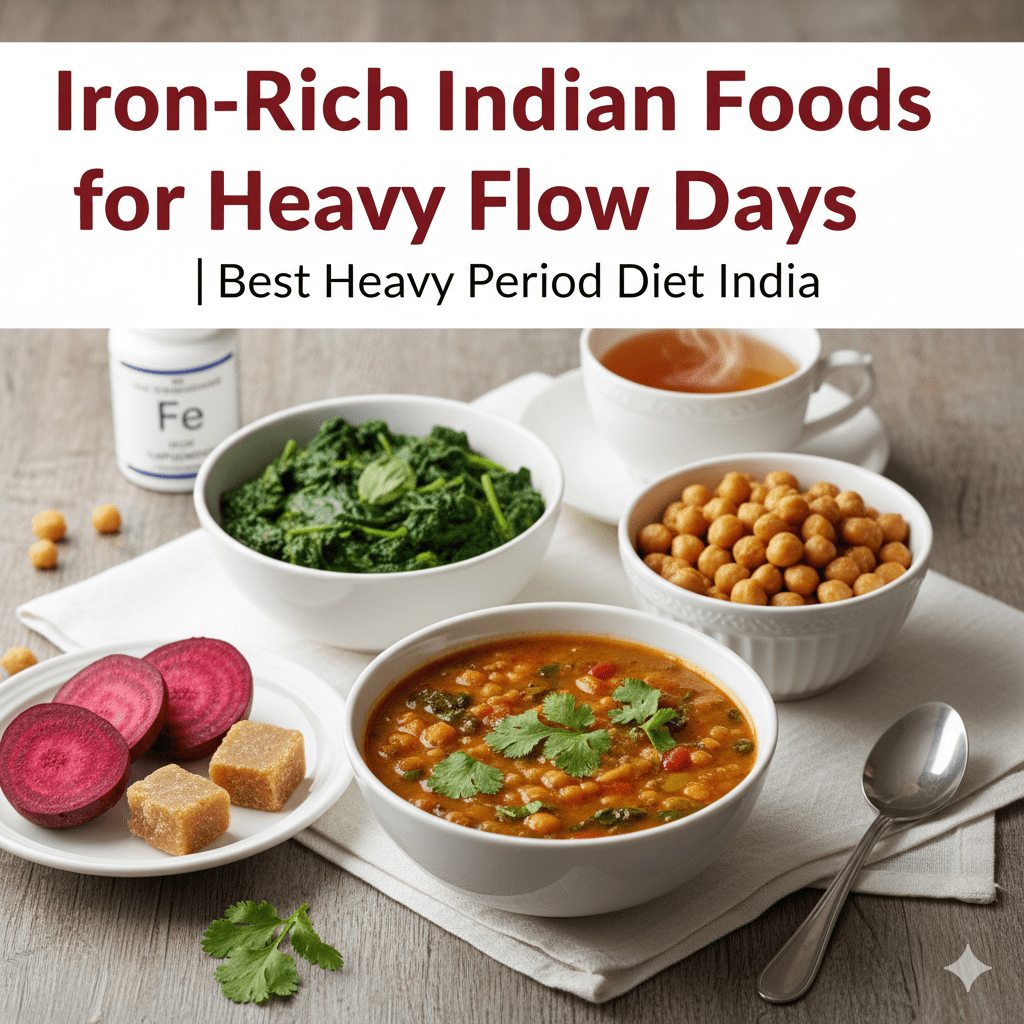
Studies show that nearly 40 percent of Indian women experience heavy menstrual bleeding at some point. If fatigue, dizziness or weakness show up frequently during your cycle, your body may need more iron support. This is where iron foods for heavy flow play an important role.
Heavy bleeding lowers iron levels faster, which can impact haemoglobin and overall energy. A structured diet becomes one of the simplest ways to support your body during these days. This guide explains the most effective Indian food choices, practical meals and science backed tips that strengthen your nutritional intake during heavy flow.
Why Heavy Flow Days Increase Your Iron Needs
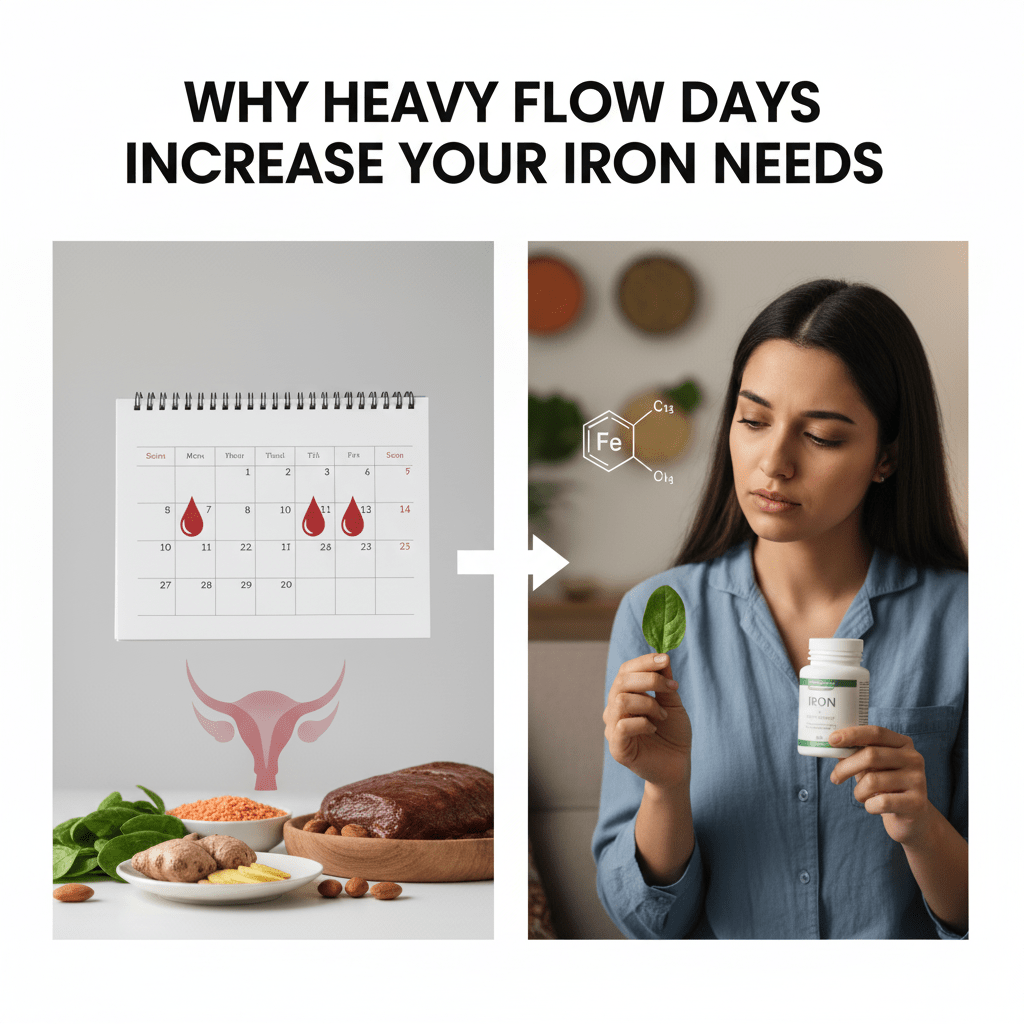
Heavy periods lead to a higher loss of blood, and with each round of blood loss, the body also loses iron. Since iron is required to produce haemoglobin, lower levels can leave you feeling tired and less alert. Increasing your intake of iron foods for heavy flow helps your body compensate for that loss. Understanding this basic mechanism helps you plan your meals better and build a diet that supports your menstrual health month after month.
Plant based iron foods are widely available in Indian kitchens, but they are absorbed more slowly than animal-based iron sources. Pairing them with vitamin C rich foods like lemon, guava, oranges or amla naturally improves absorption. At the same time, drinking tea or coffee immediately after meals can reduce iron uptake because of tannins, so spacing them out by at least an hour is helpful. Many women also benefit from maintaining steady hydration during heavy flow to support circulation and digestion.
For more structured food planning, you can explore guides that cover meal combinations suitable for various menstrual challenges. With consistent adjustments, your body gradually adapts to a more supportive and balanced iron intake pattern.
Best Iron-Rich Indian Foods for Heavy Flow Days
A heavy menstrual bleeding diet does not require unusual or expensive ingredients. Indian kitchens already offer a wide range of iron rich staples that work well for everyday meals. The key is to organise your plate so that each major meal includes at least one iron dense component. This ensures that your body receives steady support throughout the day and not just during one meal. Below are foods that help build a strong nutritional foundation during heavy flow.
Leafy Greens, Pulses and Traditional Staples
Leafy vegetables and pulses form the backbone of dietary iron in Indian households. They provide non haem iron, protein, folate and fibre, all of which support energy and blood health. Regularly including these foods strengthens your iron foods for heavy flow pattern, especially when combined with vitamin C.
Common leafy greens such as palak, methi, amaranth, bathua and moringa leaves can be incorporated into sabzis, dals, parathas or soups. Pulses like rajma, chole, black chana, masoor dal and urad dal offer both iron and protein, making them suitable for complete meals. Sprouted grains such as moong and matki increase nutrient availability and are excellent for salads or light snacks.
Millets like ragi, bajra and jowar have naturally higher iron levels compared to refined grains. Rotis made from these millets pair well with iron rich dals and greens. Adding lemon juice to these meals further improves absorption. These foods fit smoothly into everyday Indian cooking, making it easy to maintain a steady intake of iron foods for heavy flow without major changes to your routine.
Nuts, Seeds and Dry Fruits for Quick Iron Boost
Nuts, seeds and dry fruits provide concentrated iron support in small portions, which is particularly useful on days when your appetite may be low. They help prevent extended gaps between meals and supply quick energy during heavy flow.
Sesame, pumpkin and sunflower seeds add valuable nutrition when sprinkled on sabzi, khichdi, raita or salads. Dry fruits like dates, dried apricots, black raisins and figs carry natural iron and help maintain energy levels. Nuts such as almonds, pistachios and groundnuts also contribute to improved nutrient intake and satiety. Jaggery based combinations like til laddoos or dry fruit laddoos offer a traditional and effective way to supplement your diet.
Pairing these foods with fresh fruits such as oranges, guava or amla strengthens iron absorption. Including these snacks throughout the day helps maintain energy stability and supports the effectiveness of your iron foods for heavy flow diet. Their convenience also makes them easy to incorporate into work or school routines.
Non-Vegetarian Iron Sources in Indian Meals
For those who consume non vegetarian food, haem iron sources offer faster absorption and improved efficiency. Including them in moderation can support quicker recovery during heavy flow. These options blend naturally into Indian meal patterns and require minimal adjustments.
Fish varieties like mackerel and rohu, lean cuts of mutton, and egg-based dishes can strengthen dietary iron intake. Lightly cooked preparations such as fish curry, grilled fish or steamed dishes are easier on digestion during heavy flow. Eggs are versatile and can be eaten with breakfast, lunch or dinner in forms like boiled eggs, omelettes or bhurji.
Chicken liver and mutton liver contain concentrated amounts of iron but should be consumed only with medical guidance. Balancing these foods with vegetables, salads and whole grains helps maintain a supportive and complete heavy period diet. When paired with complementary plant-based dishes, these foods contribute meaningfully to a holistic iron food for heavy flow approach.
Simple Meal Ideas and Heavy Flow Diet Tips
Meal planning becomes easier when you follow structured combinations that support both iron intake and digestion. Indian meals naturally allow for balanced pairing of grains, dals, vegetables and iron dense ingredients. The key is to maintain consistency and avoid long gaps between meals to prevent weakness.
Practical meal ideas include vegetable poha with peanuts or dal cheela with lemon for breakfast, palak dal with jowar roti and cucumber salad for lunch, and chole with bajra roti or egg curry with vegetables for dinner. Mid meal options such as nuts with black raisins or a bowl of fruit featuring amla or pomegranate help maintain energy levels.
Hydration plays a major role in comfort during heavy bleeding. Coconut water, infused water, buttermilk and herbal teas support hydration and digestion without overwhelming the stomach. Minimising deep fried and sugary foods reduces bloating and helps maintain consistency in nutrient intake. You can also explore comfort strategies that help manage discomfort or cramps during your cycle.
Maintaining a structured routine ensures that your intake of iron foods for heavy flow stays consistent through the day, improving overall energy and stability.
Conclusion
Heavy periods can affect physical strength and daily functioning, but a supportive diet makes a significant difference. Consistent intake of iron foods for heavy flow helps maintain haemoglobin levels, reduces weakness and supports smoother menstrual cycles. Indian ingredients such as leafy greens, dals, millets, nuts, seeds and lean meats offer a practical way to improve iron intake without major lifestyle changes. If fatigue or excessive bleeding persists, consulting a healthcare professional ensures proper evaluation. For more menstrual health insights and cycle wise support, you can explore comprehensive guidance that helps you make informed decisions for your wellbeing.